
Finding Your Fit(ness)
At Michigan, fitness isn’t just about exercise—it’s about identity
—By Emily Diaz
Every morning, Nik Korzeniewski, a junior and Membership Services Assistant at the University of Michigan Intramural Sports Building, clocks into work at the same time as Katie MacEachern opens the doors to her fitness studio, Peach Lab Ann Arbor. Korzeniewski greets crowds of students with sweatshirts and backpacks as MacEachern welcomes her first group in for a lower-body focused strength class. Despite these differences, they’re both committed to help students at the University of Michigan stay active. “It’s the community,” MacEachern explained. “Results are great, but the reason people stay consistent is because they feel seen, supported, and inspired by the people around them.” On a campus where stress is constant and schedules shift with the semester, students turn to exercise for community and a break from academic pressure.
From the flexibility of the IM to a curated space like Peach Lab, the fitness scene in Ann Arbor offers a spectrum of opportunities to move, each catering to a different kind of student. This is especially important on a college campus: according to Harvard Health, “In the short term, exercise helps to control appetite, boost mood, and improve sleep,” benefits that are easily lost amid campus life. What’s going on in Ann Arbor isn’t just about fitness trends like reformer pilates or 12-3-30 on the treadmill, but how students are using movement as a way to stay connected to themselves and one another.
Routine and reality at the IM
At a school like the University of Michigan, it’s easy to build a routine—but just as simple to lose it. The IM sits at the center of that tension, a sprawling space where students file in, trying to squeeze a workout in between classes. “It’s packed at the beginning of the semester when people are trying to get into a routine,” Korzeniewski said. “As midterms start, it definitely dies down.” Even so, the IM remains more than just a gym. Its free access and welcoming environment make it a social outlet, too. “When I go to the IM, I always do it with friends,” said senior Luella Angert. That social aspect may be one reason students return, even when academic stress builds. In the College News article titled “The Importance of Fitness for College Students,” Kaley Newcomb notes that “many college students…find that exercise rewards you with more energy.” For Michigan students, that can mean powering through a study session or just having more vibrancy when with friends.
The rise of the boutique
Boutique workout studios are located all over Ann Arbor, and, if financially feasible, may be the best way for students to exercise if they prefer a smaller, guided, and often closer to home option. Peach Lab, a strength-focused studio, helps students meet needs that large gyms cannot. “Each class is intentionally structured, so you can simply show up, follow expert guidance, and leave feeling stronger and more confident,” MacEachern said. For students who feel overwhelmed by the layout of the IM, that kind of direction can be really beneficial. In describing the composition of the classes that Peach Lab provides, MacEachern expressed, “Lifting heavy isn’t just about muscle–it’s about better hormone balance, stronger bones and joints, improved mood, and a major confidence boost.” And while these classes are often expensive, many students justify the cost due to the curated experience that they feel align with fitness fads, giving them a sense of belonging with their peers.
Finding purpose through exercise
It’s no surprise that students choose to incorporate exercise into their daily lives: Harvard Health reports that even short, vigorous bursts of exercise are associated with health gains. Despite the growing popularity of paid workout classes, going to a free gym such as the IM can be just as beneficial. In the book Exercise to Prevent and Manage Chronic Disease Across the Lifespan, Jack Feehan and colleagues explain that adults in high-income countries report twice the prevalence of insufficient physical activity compared to those in low-income countries (p. 51). While a university campus is a much smaller scale, this still demonstrates that greater access does not equate to better activity.
Exercise is not just a way for students to maintain their health, though. It also allows for them to build structure and stability. This is why so many fitness facilities are able to remain open in Ann Arbor. They help students develop consistency while building a connection with others. As MacEachern explained, “There’s something about walking into a space where everyone’s working toward the same goal that keeps you coming back.” That sense of shared purpose helps students stay consistent and form discipline, which is applicable outside of the gym as well. Working out with friends is one way to stay accountable, and it doesn’t require you to know anyone before trying out a gym or studio. Korzeniewski, when asked about how the IM supports student wellness overall, reported that “People meet through just showing up.”
Movement as culture
Physical fitness is promoted far beyond the University of Michigan, especially through the presence of social media. “I definitely notice students going to workout classes. A lot of my friends only go to workout classes as their exercise. They mainly do heated workouts, like HIIT or pilates, which I find to be a trend–I see a lot of studios catering to this and it is all over my social media,” Angert said. These types of workouts circulate online and shape how students think about exercise, making them feel like workout classes are the “right” choice, even when the IM is free. Studios are using this to their advantage. As MacEachern described, “Social media is such a powerful way to give people a glimpse into what a workout at Peach Lab really looks and feels like.” While anyone can design their own gym routine, boutiques have to rely more on social media to show students that the experience is worth the price.
Online visibility has broadened the appeal of staying active and normalized exercise as a part of student life. In Exercise to Prevent and Manage Chronic Disease Across the Lifespan, Feehan and associates explain that online platforms can enhance motivation and accountability, and that social comparison proved more effective than mere social support in increasing activity levels (p. 58-59). Seeing others share progress can spark motivation. This is just another reason why fitness has become such a visible part of college life.
Balance and belonging
Whether you prefer the accessibility of the IM or the structure of a boutique studio, there are endless possibilities when it comes to staying active in Ann Arbor. Exercise is a grounding practice and it is a way for people to find something that they are passionate about without having any additional pressure. Wellness is not something that you can receive a grade for. Rather, it is self-determined and a way that students can find balance on their own terms.
Though fitness fads come and go, the drive to move and belong feels lasting. In many ways it mirrors the college experience, showing students how to develop perseverance and community. As MacEachern put it, “College is the time to build habits that stick, and we’re here to help create healthy routines students will carry for life.”
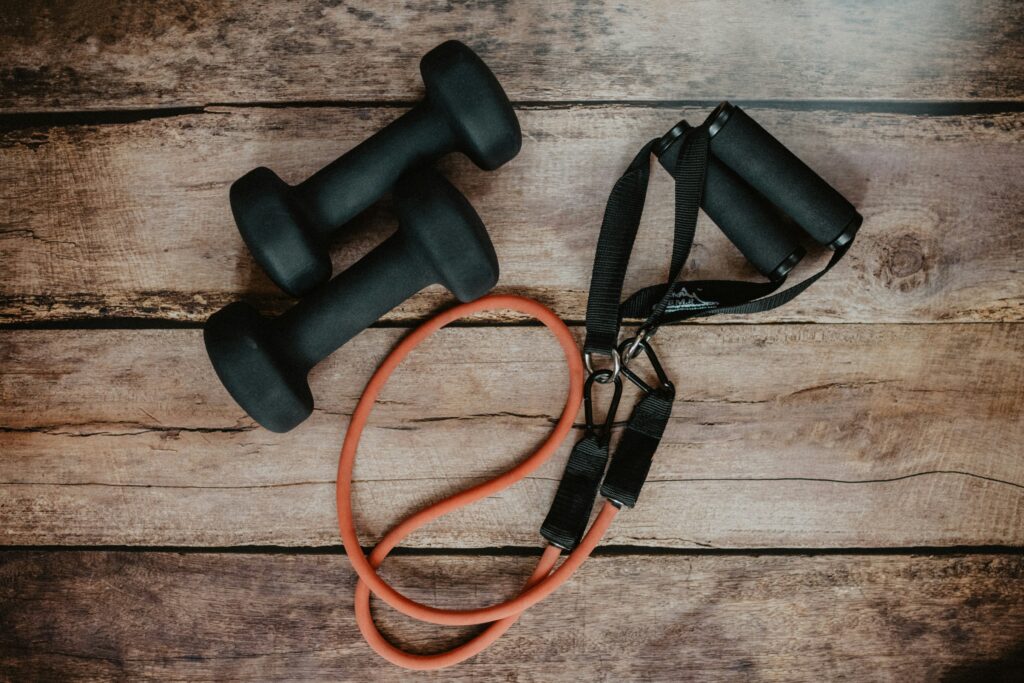
Feature photo by Kelly Sikkema on Unsplash.